
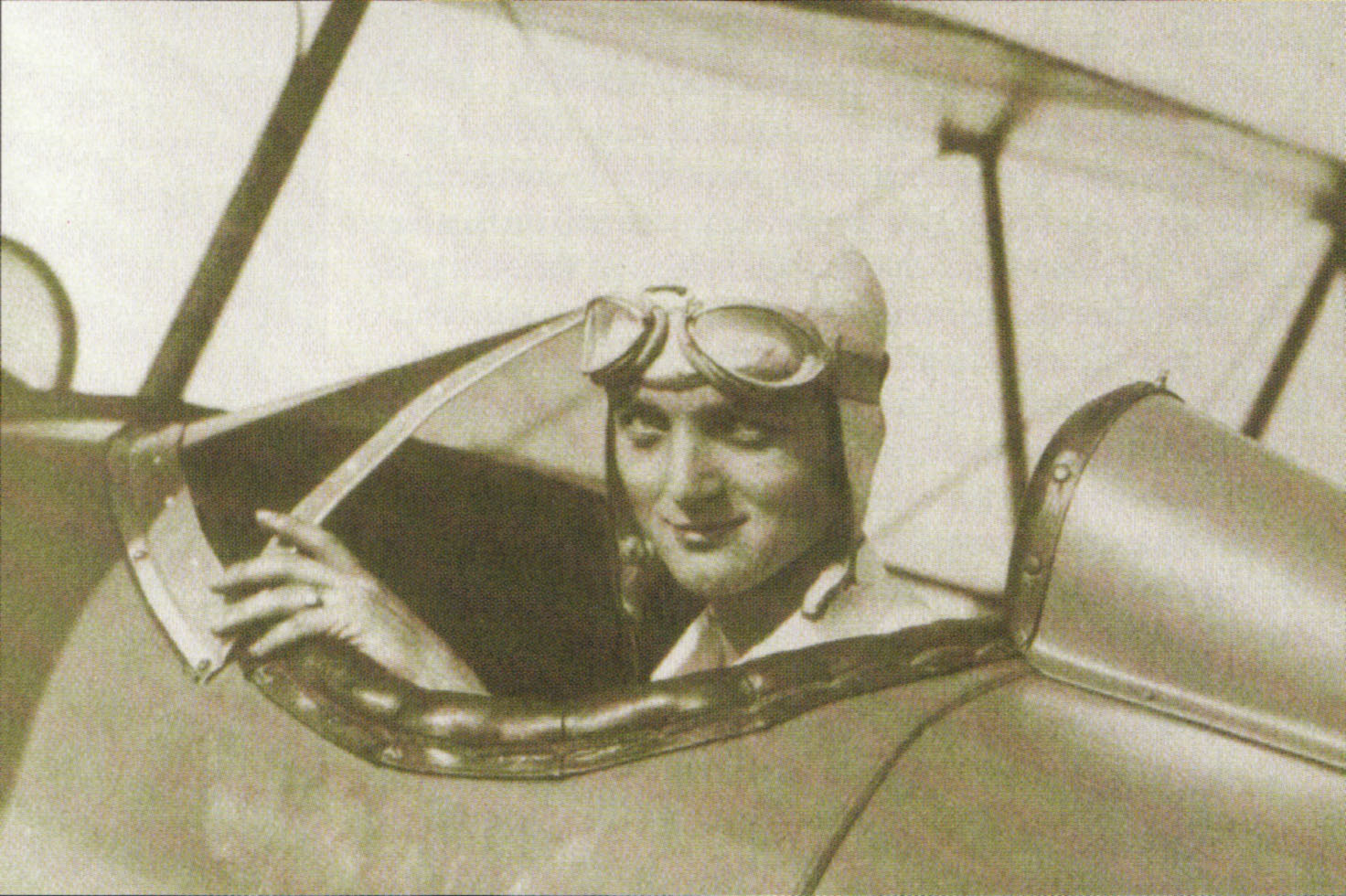
Although the pioneer aviator Amelia Earhart, whose rise to stardom and subsequent fall to immortality, are well know by most Americans, many other women played equally significant roles in developing the aviation industry during the 1920s and 1930s.
For one University of Arkansas student, Iris Louise McPhetridge, the line from terra firma to tenuis aer, from solid ground to the thin air, was neither straight nor simple.
“Going down to the University of Arkansas at what now seems the very tender age of fifteen, I majored in journalism,” she wrote in her memoir.
There was no formal department of journalism in the early 1920s when McPhetridge arrived on campus, but Murray Sheehan, an associate professor of journalism who also served as the university’s publicity writer, taught several journalism classes as part of the English curriculum.
Students could take newspaper writing and editing in 1921. Soon, though, Sheehan added a couple more advanced classes for students who wanted to continue in the field. Sheehan made their classwork “as practical as possible” by connecting the student writers and their stories with the local daily newspapers and the student newspaper, The Arkansas Traveler.
McPhetridge worked on the student newspaper for a short period, but Sheehan left the university in 1924, and perhaps this change pushed McPhetridge to make a change of her own. She shifted her studies to physical education at a time when women’s athletic competition was on the rise.
At the same time, the university built the Women’s Gymnasium just north of Peabody Hall. Today, it houses the Army Reserve Officers’ Training Corps, but in 1925, it allowed women to play sports such as basketball and volleyball indoors for the first time. The women’s teams had played basketball on an outdoor sod court up until that time.
McPhetridge, who had been captain of the freshman women’s basketball team when it won the all-university championship, served as head of the intramural basketball competition for the Women’s Athletic Association when she was a junior.
She also joined the Rootin’ Rubes and was president of her sorority, Delta Delta Delta. And, as she recalled things in her memoir, she jumped from physical education courses and started taking premedical courses. By the end of the 1925-26 school year, she had taken a lot of courses but not enough of any single discipline to get a degree.
In the meantime, she had discovered the world of aviation. During a break from school, she took a job in Wichita, Kansas, working for a company whose owner also had a vested stake in Travel Air, the biplane manufacturer spearheaded by Walter Beech. McPhetridge wrote that she spent her weekends at the factory, where she eventually met Beech and got to go for a few airplane rides.
“Before I went back for my third year of college in 1925, I had made up my mind that I could learn to fly and, furthermore,” she wrote, “that I was going to get into aviation no matter how long or laborious the process.”
Though laborious, the process turned out to not take too long.
When McPhetridge returned to Wichita the next year, Beech offered her a job with Travel Air’s new Pacific Coast distributor. She could work in the aviation business in San Francisco and learn how to fly at the same time. When she told her parents of the unbelievably good news, they found it rather unbelievable too, but unbelievably bad! Only her sister Alice was as thrilled.
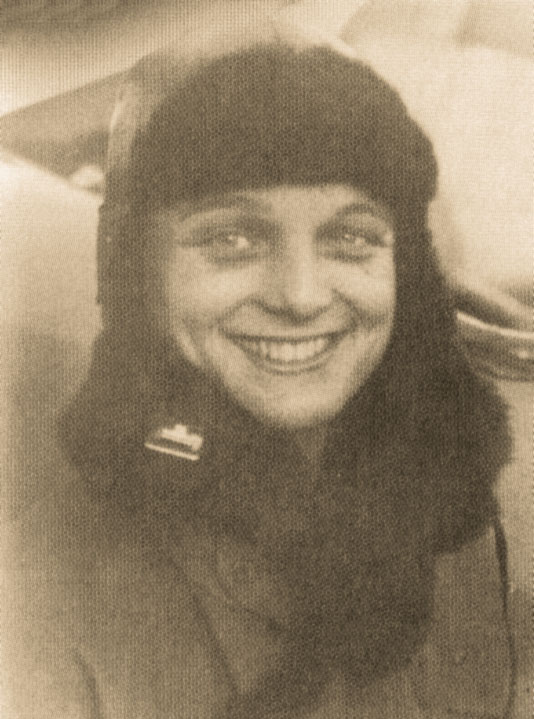
Despite their concerns, her parents allowed her to take the leap from Bentonville to the West Coast. In 1927, she flew west as a passenger in one of Travel Air’s new planes and began helping with the operation of Crissy Airfield, its training school and charter service. At 22, she was “giddy with the self confidence of youth, no task seemed too great.”
Within four months, she made her first solo flight, about the same time that Amelia Earhart was becoming the first woman to cross the Atlantic by air, albeit keeping the flight log rather than as pilot.
Early the next year, McPhetridge began preparation to try to break the women’s record for altitude. Setting the record required not only designing a plane and engine to operate in the thin air of high altitude, but her team had to find suitable oxygen equipment for her. After a few scares in the plane — including three “dead-stick landings” in one day, landings in which the engine had conked out completely and she landed without power — she set out on Dec. 7, 1928, for the new women’s altitude record of 20,260 feet.
In 1929, she also set new women’s records for speed and endurance, becoming the only the woman to hold all three records at the same time.
“I was exalted with speed, with swift, powerful, unobstructed flight, cutting the air with knife-edged ease,” she wrote. “Mastery, accomplishment, freedom, ego, verve, vitality. I was ready to burst with the joy of being so thoroughly alive — for the ability to fly.”
Somewhere in the middle of this record-setting period, she also found to time to get married to one of the engineers who had worked on her planes, Herbert Von Thaden. Louise McPhetridge became Louise Thaden, a name that Americans across the continent would soon come to know.
Thaden entered the Women’s Air Derby in 1929, a cross-country race from Santa Monica, Calif., to Cleveland, Ohio. Also competing in the race were pioneer aviators such as Pancho Barnes, Blanche Noyes and Amelia Earhart. Besides having a lightning-quick plane, Thaden’s effort in the stage race was also heightened by knowing that one of the stops going east would be in Wichita, where she was reunited with her family and Walter Beech.
Wearing jodhpurs, knee-high boots, a white linen shirt and a pilot’s leather cap, Thaden won the Air Derby, in part, by simply staying in the air.
Her rivals were beset by trouble. Earhart’s plane was damaged slightly when landing on the sandy Arizona tarmac of Yuma’s airfield, and she also stopped during take-off on the final leg of the race to help a rival whose plane had flipped upside-down. Earlier, Noyes suffered a mid-air fire over Texas. Barnes took a wrong turn and followed a rail line into Mexico before realizing her error, losing vital time in a race in which the leaders were separated by just minutes. One of the pilots, Marvel Crosson, lost altitude in the Gila Mountains near Phoenix, crashing and dying.
Such was the state of aviation at the time.
Back on the ground, Thaden was hired in 1930 as public relations director of Pittsburgh Aviation Industries and director of the women’s division of the Penn School of Aeronautics. The same year, she and Earhart founded the Ninety-Nines, an international organization for female pilots. Thaden served as the treasurer and vice president while Earhart served as president. The organization still exists today.
In 1932, Earhart became the first woman to fly solo across the Atlantic, landing in Ireland after nearly 15 hours.
Not to be outdone, Thaden and fellow aviator Frances Marsalis tackled what has always been the most complex problem in aviation: staying in the air. For more than eight days — 196 hours, 5 minutes and 45 seconds — the tag-team stayed in the air, piloting their “Flying Boudoir” to a world endurance record above Long Island, N.Y.
Aside from the difficulties of eating and sleeping, Thaden recalled the real dangers: “There were two hundred gallons of gasoline to pump every twenty-four hours by a hand pump which wobbled a half pint each full stroke. There was oil to pump, rocker arms to grease, batteries to change, an hourly log to keep. A hundred and one things.”
They used 2,338 gallons of gasoline and 32.5 gallons of oil, all brought to their midair home by a refueling plane.
In 1935, Thaden became a field representative for the National Air Marking Program, a federal effort to paint directions on the tops of buildings indicating where the nearest airfield could be found, a program that saved many future Pancho Barneses from accidentally flying into Mexico.
In 1936, flying a Beech Staggerwing biplane, Thaden became the first woman to win the Bendix Trophy Race, the premier aeronautical race of its time. Her winning effort set a new transcontinental record of 14 hours and 55 minutes from New York City to Los Angeles.
As a result of her continuing efforts, she was awarded the Harmon Trophy in 1936, given each year to honor outstanding aviators.
Thaden’s one-time rival and long-time friend, Earhart, had won the Harmon Trophy in 1932. Thaden wrote in her memoir that she talked to Earhart not long before Earhart set out on her ill-fated attempt to circumnavigate the globe.
Thaden, who had risked life and wing in many of her own exploits, tried to talk Earhart out of going.
“Look here,” Thaden says she told Earhart, “You’ve gone crazy on me. Why stick your neck out a mile on this round-the-world flight? You don’t need to do anything more. You’re tops now and if you never do anything you always will be.”
Thaden quoted Earhart as replying: “You’re a fine one to be talking to me like that,” “Aren’t you the gal who flew in last year’s Bendix with a gas tank draped around your neck?”
Thaden argued that she flew over land for the entire Bendix with some chance of walking out of any emergency landing.
“If I should bop off,” Earhart told Thaden, “it will be doing the thing I’ve always wanted to do most.”
This story first appeared in the Winter 2009 edition of Arkansas magazine.
 Word, Image and Sound