This story first appeared in the summer edition of Arkansas magazine in 2008.
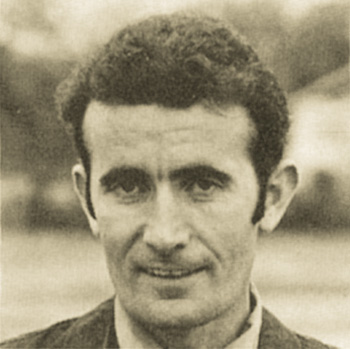
When John McDonnell was in high school, growing up in County Mayo, Ireland, his younger brother Frank was running track. Frank, who already loved the sport, asked John for help. John played soccer but had never run track competitively, but he agreed to help pace his younger brother on a run. Frank asked John to take a 20- or 30-yard lead, and then waved him on ahead to a 50-yard head start. The two set off running, and although Frank gained a little on John, the younger brother never caught the elder.
Frank’s estimation was that John McDonnell might have some aptitude for track.
If no one was stupid enough ever again to give John McDonnell a head start, it mattered not a whit. He took up track and nearly always won, regardless of the competition.
McDonnell began running track during high school in Dublin, winning the Irish Championships in 1960 and then running the 5,000-meter run well enough to qualify for the 1960 Olympics. He didn’t get to compete because Ireland chose to send another runner, whom McDonnell had beaten but who had more connections with Ireland’s track establishment. Then an injury kept McDonnell from competing for the 1964 Olympics.
McDonnell came to the United States the next year to run for Emporia State College in Emporia, Kansas, helping its team win the NAIA outdoor track title. Without a scholarship at Emporia, he moved to New York for about a year, working as a television cameraman, and then left to run cross country and track on scholarship for Southwestern Louisiana University for three years. While there, he became a six-time All-American.
Amid this success, he had a chance to run against the legendary Jim Ryun, who was setting American records in the mile and 800-yard run. Ryun and McDonnell competed in the 2-mile run on a hot and humid day in Lafayette, Louisiana. Through the first three-quarters of the race, McDonnell ran third, so close behind the leaders that he was afraid at times he might trip on the heels of Ryun, but McDonnell jumped into the lead with two laps to go and won the race going away.
After graduation, he gained his American citizenship and worked stints as a high school track coach before moving to Arkansas in 1972 to coach the university’s cross country team. To make ends meet, McDonnell taught shop in the Greenland School District.
When McDonnell was promoted from cross country coach to head track coach in 1978, a press release about McDonnell quoted athletic director Frank Broyles with perhaps the understatement of century: “We are confident he will develop all areas of our track program into the status our distance runners enjoy.”

McDonnell’s distance runners had won three consecutive conference titles in cross country meets at that point, but they had not quite begun their domination at the national level.
Broyles clearly had bigger things in mind than simply conference wins. McDonnell said: “When Coach Broyles hired me, he told me he wanted to compete on a national level, maybe win a national championship every five years. He wanted us to finish ahead of Texas and win as many Southwest Conference titles as possible. If I took him at his word, our national championships should keep me around another 190 years.”
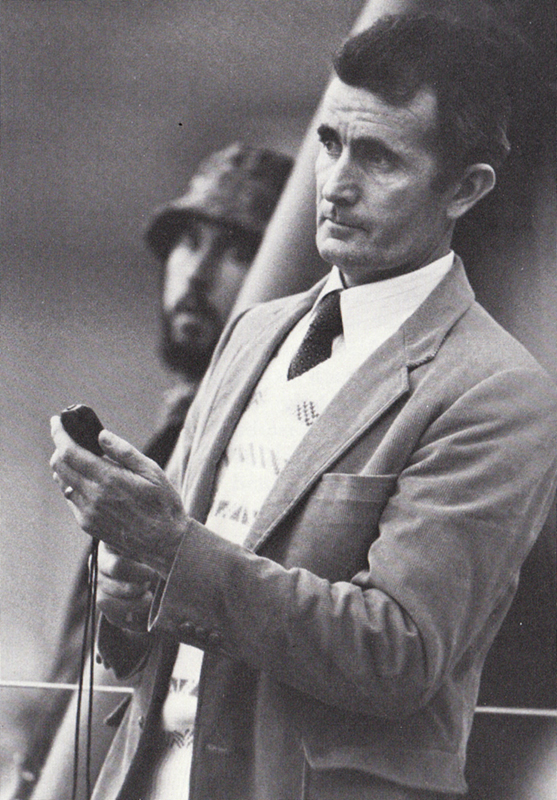
Instead, McDonnell packed it all into 36 years. The Razorback cross country team continued winning conference championships, 17 in a row against Southwest Conference foes and then another 17 in a row against the Southeastern Conference, never letting the door open to another school. Soon, the indoor and outdoor track teams were also winning conference meets.
In 1984, the indoor track team won McDonnell his first national title, edging past Iowa State at Syracuse, New York. The Razorbacks looked as though they had easily won their first national meet when the judges began disqualifying teams in the final relay event. Iowa State stood to gain a higher placing and more points depending on who was disqualified, but it wasn’t quite enough to catch the Hogs, who won by 2 points. The next year, Arkansas left nothing to chance, bringing home the team’s first triple crown, winning the national championships in cross country, indoor track and outdoor track, a feat only one other school has achieved.
Mike Conley, a five-time NCAA champion at Arkansas and the 1992 gold medal winner in the Olympic triple jump, once described McDonnell’s inspiration and what drew him to the university: “When he recruited me and the others who eventually won the school’s first national triple crown, there weren’t any facilities to speak of. We came because we believed in him and what he thought he could do at Arkansas. The facilities came later because of his success.”
During his tenure, five of McDonnell’s teams won triple crowns, including a triple triple, winning all three national meets three years in a row during the early 1990s. The last triple also earned the Arkansas track team and Coach McDonnell a trip to the White House and a meeting with President Bill Clinton.
His teams became perennial favorites at the storied Penn Relays, the largest track and field event outside of the Olympics. Spectators who loved to wave the Jamaican flag during international competitions quickly raised cheers for the Hogs when the collegiate teams lined up at Franklin Field. And when they toed the starting line at the Drake Relays or the Mount Sac Relays, Arkansas runners dominated.
The numbers are staggering: 20 conference triple crowns, 23 Olympians, 55 national champions, 82 conference titles, 179 All-Americans. Signs at the city limits proclaiming Fayetteville the track capital of the world had to use interchangeable numbers to keep up with the ever-growing number of national titles, now at 42.

To hear McDonnell talk, though, ’twas nothing but finding good people and bringing out the best in them.
With the success, of course, came laurels. McDonnell has been named the national track coach of the year 30 times. He has been inducted into the National Track and Field Hall of Fame, the U.S. Track and Cross Country Coaches Hall of Fame, the University of Arkansas Sports Hall of Honor and the Arkansas Sports Hall of Fame, among others. And the outdoor track and field stadium at the University of Arkansas was named in his honor in 1998, the year he won his 30th national title.
Questions swirled that year about whether, after 25 years of coaching, McDonnell might be thinking about retiring. Another 12 national titles in the next 10 years was the answer.
 Word, Image and Sound